

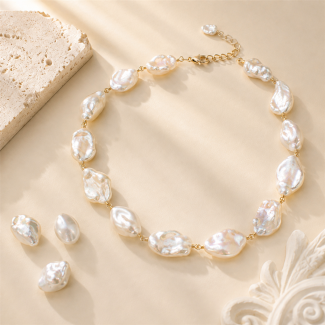
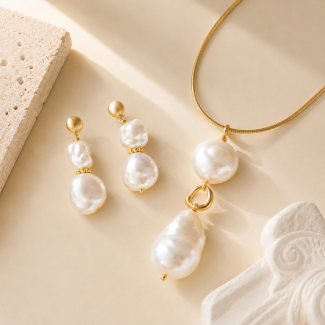
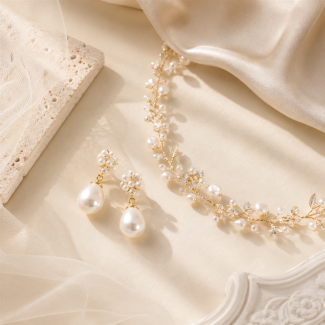
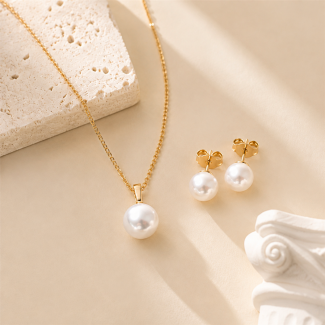
Pearls can tolerate brief contact with clean water during careful cleaning, but pearl jewelry should not be worn in the shower, bath or swimming pool. The pearl is only one part of the piece: water can also affect thread, knots, adhesive, plating and settings.
The useful distinction is between controlled cleaning and repeated soaking. A lightly dampened cloth is very different from wearing a pearl necklace under running water.
Does water damage the pearl itself?
Brief contact with lukewarm water does not automatically damage a pearl. GIA guidance allows warm, soapy water for occasional thorough cleaning and advises that strung pearls must dry completely before wear.
Problems arise when exposure is prolonged, repeated or combined with heat, chemicals and mechanical stress. Water may remain near drill holes, weaken some stringing materials or loosen glued settings.
Why the whole piece matters
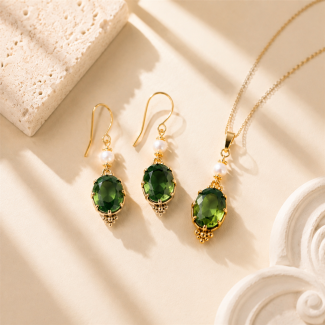
A pearl earring, ring, necklace and bracelet respond differently to water because their construction differs.
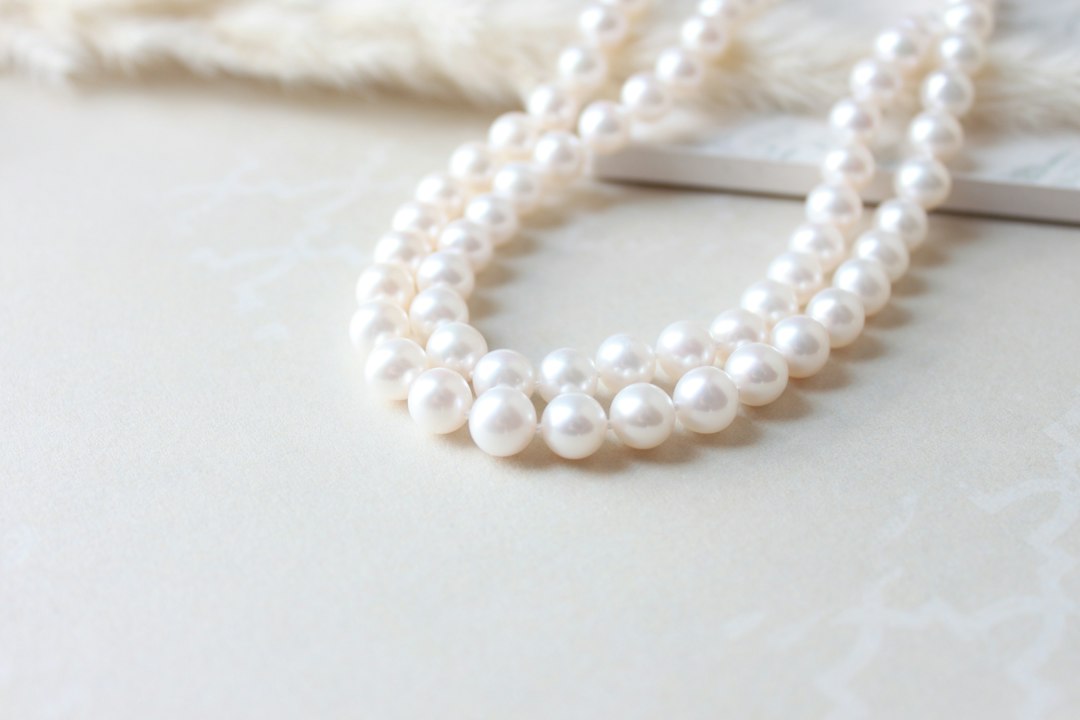
- Strung necklaces and bracelets: thread can stretch, weaken or remain damp between pearls.
- Glued studs and settings: repeated moisture and heat may affect adhesive.
- Plated metal: water, soap and friction can shorten the life of the finish.
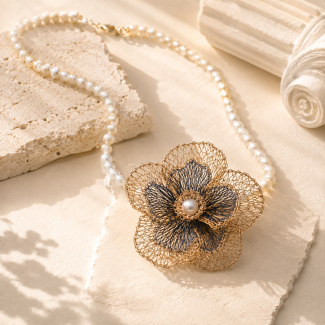
- Mixed-material jewelry: porous gemstones, fabric, leather or other components may need stricter care.
When materials are unknown, use minimal moisture and ask the maker or a jeweler for guidance.
Can you shower with pearls?
It is best to remove pearl jewelry before showering. Warm water, soap, shampoo, conditioner and repeated soaking create more risk than a brief cleaning session. Steam and heat can also affect pearls, adhesive and finishes.
Make pearls the last item you put on after getting ready and the first item you remove before washing.
Can you swim with pearls?
No. Remove pearls before swimming in a pool, sea, lake or hot tub.
- Chlorine and pool chemicals can damage pearl surfaces and jewelry components.
- Salt water can remain in drill holes and thread, and swimming adds repeated movement and friction.
- Hot tubs combine chemicals with heat.
- Open water creates a high risk of losing the piece.
Even if the pearl itself appears unchanged after one swim, the thread, clasp or adhesive may have been stressed.
What about handwashing and rain?
Remove pearl rings and bracelets before handwashing when practical. Soap and sanitiser can collect around settings, and repeated wetting is unnecessary.
A little rain is not usually an emergency. Blot the piece with a soft cloth, lay it flat if it is strung, and allow it to dry completely away from direct heat.
Why cleaning with water can still be safe
Safe cleaning uses limited water for a short time. It also keeps the piece supported and allows controlled drying.
For light residue, use a clean, very soft cloth lightly dampened with lukewarm water. If a mild soap solution is appropriate for every material in the piece, use only a small amount and remove the residue with another damp cloth.
Do not submerge finished pearl jewelry. Follow the full method in our guide to safe ways to clean pearl jewelry.
What to do if pearl jewelry gets wet
- Remove the piece carefully. Do not pull on wet thread or twist a glued pearl.
- Blot—do not rub. Use a clean, very soft cloth.
- Lay strung jewelry flat. Support the full length on a clean towel.
- Let it air-dry completely. Keep it away from radiators, hairdryers and direct sunlight.
- Inspect the construction. Look for stretched thread, gaps, loose knots, movement or visible adhesive.
- Seek help if needed. Stop wearing the piece if a setting, clasp or strand seems weaker.
Do not store the jewelry while any part remains damp. Once dry, follow our guide to storing pearls without scratches or pressure.
Can pearls handle perspiration?
Perspiration contains salts and acids that can remain on pearl surfaces. Remove pearls before exercise and wipe them with a soft cloth after normal wear.
If the piece became heavily damp, use the drying steps above and inspect thread or adhesive before wearing it again.
Are pearl rings more vulnerable to water?
Pearl rings receive frequent contact with handwashing, soap, sanitiser and hard surfaces. Remove them before washing dishes, bathing, cleaning or applying hand cream.
A ring set with adhesive needs particular care. If the pearl begins to move, do not continue wearing it or add household glue; ask a jeweler to inspect the setting.
A simple water rule for pearl jewelry
- Okay: a lightly damp cloth and occasional controlled cleaning.
- Avoid: showering, bathing, swimming, soaking and steam.
- After accidental water: blot gently, dry flat and inspect the construction.
For the broader routine—including cosmetics, storage and restringing—read how to care for pearl jewelry.
Explore more ways to clean, store and protect jewelry in our Jewelry Care Guide.
Frequently asked questions
Can I shower with pearl earrings?
It is best to remove them. Water, shampoo, conditioner, heat and repeated moisture can affect adhesive and metal components even when the pearl surface looks unchanged.
Does chlorine damage pearls?
Pool chemicals are not appropriate for pearl jewelry and can also affect thread, settings and finishes. Remove pearls before swimming.
What if a pearl necklace is soaked?
Blot it gently, lay it flat on a clean towel and let it dry completely. Inspect the thread and knots for stretching or weakness before wearing it again.
Can salt water harm pearl jewelry?
Yes. Salt water can remain in thread and drill holes, while swimming adds movement, friction and loss risk. Do not wear pearl jewelry in the sea.